Haber ·
What Is the PPWR? EU Packaging Regulation Timeline, PFAS Ban and Impact on Exporters
What is the PPWR, what changed on 12 August 2026 and which rules follow in 2028 and 2030? We summarise the EU packaging regulation timeline, the PFAS ban and what it means for packaging makers, using official sources.
- Reading time
- 7 min
- Updated
- 5 October 2026

The PPWR (Packaging and Packaging Waste Regulation) is the European Union regulation that governs packaging and packaging waste with a single set of rules across all member states (Regulation (EU) 2025/40). It entered into force on 11 February 2025 and has applied in phases since 12 August 2026; the first concrete step is a restriction on PFAS in food-contact packaging. In this article we combine the European Commission's official announcements with reports from the World Packaging Organisation (WPO) and the Sustainable Packaging Coalition (SPC) to summarise the timeline and what it means for Turkish companies selling packaging or packaged goods into the EU.
In short:
- The PPWR replaces national packaging rules with common rules that apply directly across the EU.
- Since 12 August 2026, food-contact packaging containing PFAS above the limit values can no longer be placed on the EU market.
- A harmonised sorting label follows in 2028; empty-space limits, reuse targets and the requirement for all packaging to be recyclable follow in 2030.
- Companies in Türkiye producing packaging for EU brands should prepare for customer requests for PFAS, material and recyclability data.
What is the PPWR and why was it introduced?
According to the European Commission, each European generated on average 178 kg of packaging waste in 2023. Without action, total packaging waste was projected to grow by 19% by 2030 compared with 2018, and plastic packaging waste by as much as 46%. At the same time, national rules that differed from country to country placed a heavy administrative burden on packaging companies operating across borders.
The PPWR was designed as a single answer to both problems: common EU rules covering the entire packaging life cycle in place of fragmented national requirements. Its four key objectives are:
- Stop the ever-increasing trend in packaging waste generation
- Improve the functioning of the internal (single) market
- Foster efficiency in the waste value chain
- Promote the circular economy
Because the PPWR is a regulation, unlike a directive it applies directly in every member state without waiting to be transposed into national law. The Commission expects the common rules to save businesses substantial compliance costs in the medium term.
PPWR timeline: which rule starts when?
| Date | What changes? |
|---|---|
| 11 February 2025 | The regulation entered into force (Regulation (EU) 2025/40) |
| 30 March 2026 | The Commission published its implementation guidance and a Frequently Asked Questions document |
| 12 August 2026 | The regulation started to apply across the EU; restriction on food-contact packaging containing PFAS |
| January 2028 | The Commission is due to set material-specific design-for-recycling criteria and recyclability performance grades |
| 12 February 2028 | Sticky labels on fruit and vegetables, permeable tea/coffee bags and soft single-serve beverage units must be compostable under industrially controlled conditions |
| 2028 | A harmonised packaging labelling system to make waste sorting easier |
| 2030 | Empty-space limits, restrictions on certain single-use plastic packaging, reuse targets, mandatory recycled content in plastic packaging and all packaging to be recyclable |
| Up to 2040 | Stepping-stone requirements on separate collection, higher-quality recyclates, recycled content and reuse targets |
Sources: European Commission (announcements of 30 March and 11 August 2026), SPC 2026 Sustainable Packaging Trends Report, WPO Global Packaging Design for Recycling Guide. The official text of the regulation prevails for exact provisions.
What changed on 12 August 2026? The PFAS restriction in food packaging
The first and most concrete rule to apply is the restriction on PFAS (per- and polyfluoroalkyl substances). Since 12 August 2026, food-contact packaging containing PFAS above strict limit values can no longer be placed on the EU market. Known as "forever chemicals" because they can accumulate in the environment and in the human body, PFAS were used to make packaging water- and grease-repellent.
The examples the Commission cites directly concern paper and board packaging makers:
- Takeaway containers and fast-food wrappers
- Microwave popcorn bags
- Bakery paper
- Pizza boxes
If you produce any of these for a customer in the EU, the first step should be to ask your barrier-coating, varnish and ink suppliers for a written declaration that their products are PFAS-free. The Commission's March 2026 guidance also explains how the PFAS restriction will be enforced.
What did the Commission's March 2026 guidance clarify?
On 30 March 2026 the European Commission published implementation guidance and a Frequently Asked Questions document so that the regulation is applied uniformly in every country. The guidance clarifies in particular:
- When a company is considered a manufacturer or a producer
- Which items are considered packaging under the PPWR
- How restrictions on single-use packaging and the reuse targets apply
- Enforcement of the PFAS restriction in food-contact packaging
- Extended producer responsibility (EPR) and the obligation to set up deposit and return systems
The Commission stresses that the guidance and the FAQs do not replace, add to or amend the regulation. Secondary legislation is also being prepared on EPR registration and reporting formats, consumer sorting labels, recycled content in plastic packaging and recyclability criteria.
The global picture: how widespread are EPR and separate collection?
The PPWR is not alone. The World Packaging Organisation's (WPO) 2025 Sustainability Survey of its member countries shows that similar rules are established across much of the world:
| Question | Share of respondents answering "yes" |
|---|---|
| Is there an extended producer responsibility (EPR) or product stewardship programme? | 73% |
| Is the EPR programme regulated? (modulated fees 19%, taxed 16%) | 65% |
| Are recyclable materials collected separately? | 69% |
| Are there single-use plastics (SUP) laws or regulations? | 67% |
| Does the country have its own packaging and waste targets? | 66% |
| Is there an on-pack recycling labelling programme for consumers? | 45% |
| Is there a Plastics Pact? | 42% |
| Is there chemical or advanced recycling? | 30% |
Source: WPO Sustainability Survey Findings, 2025 Report. Shares reflect the answers of participating WPO member countries and regions; Türkiye is among the participants.
The SPC's April 2026 report points the same way: seven US states have passed packaging EPR laws, and one in five Americans now lives in an EPR state. In the UK, the Recyclability Assessment Methodology (RAM) used since January 2025 directly influences the EPR fees producers pay from 2026. In Canada, the largest producer responsibility organisations published common recyclability guidelines in 2025.
The situation in Türkiye: Zero Waste, EPR and deposit
The answers given on behalf of Türkiye by the Packaging Manufacturers Association (ASD) in the WPO 2025 survey show that Türkiye is moving in the same direction:
- Targets: a recovery target of 60%; recycling targets of 55%, 65% and 70% for 2025, 2030 and after 2031 respectively. There are also separate material-specific targets, including wood.
- Separate collection: glass, paper/board, plastic and metal are collected in separate bins in buildings under the Zero Waste collection scheme; this is mandatory for public buildings, hospitals, schools, universities, airports, industrial plants and retailers.
- EPR: extended producer responsibility is regulated within Zero Waste management; recovery charges for packaging materials are collected by the government every three months.
- Deposit: the deposit system, which started with aluminium, glass and PET bottles, is planned to add HDPE bottles and beverage cartons in its next phase.
- EU link: the leading programmes include the Circular Economy Action Plan and the Carbon Border Adjustment Mechanism (CBAM) linked to the European Green Deal.
In short, for a Turkish packaging maker exporting to the EU, the PPWR is not a distant Brussels matter; it is the export side of a transition that is moving the same way at home.
What does it mean for Turkish packaging makers and exporters?
The PPWR covers companies placing packaging or packaged products on the EU market; the Commission guidance defines who counts as a manufacturer or producer. A printer or carton plant in Türkiye producing packaging for EU brands can expect compliance data requests from its customers, even where the legal obligation does not fall on it directly. Six steps to prepare now:
- PFAS declaration: for food-contact paper and board jobs, obtain written PFAS-free declarations from your barrier-coating, varnish and ink suppliers.
- Material inventory: record the material type and weight of every pack; EPR reporting requires data by material and weight.
- Design for recycling: move towards designs with a high fibre share, one-sided coatings and easily separable components. Details: recyclable paper packaging design.
- Labels and artwork: plan plate and artwork changes for the harmonised sorting label due in 2028.
- Right-sizing: optimise box dimensions to the product ahead of the 2030 empty-space limits; this calls for flexibility in cutting dies and folder-gluer set-ups.
- Material switch: assess customer requests to move from plastic to paper early; according to the SPC, high EPR fees on complex plastic packaging keep alternative materials on the agenda.
Which machines do you need to switch to paper and board packaging?
As the PPWR and similar rules accelerate the shift from plastic to fibre-based packaging, paper and board converting capacity becomes critical. Our guides explain in detail which machine family each product needs:
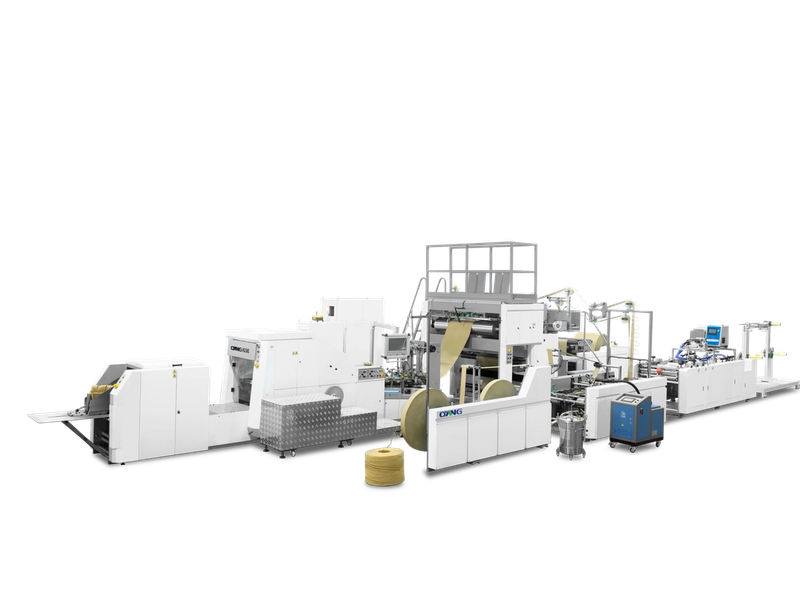
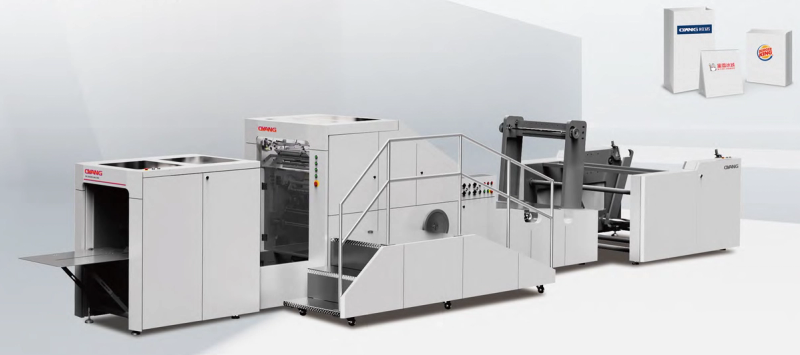
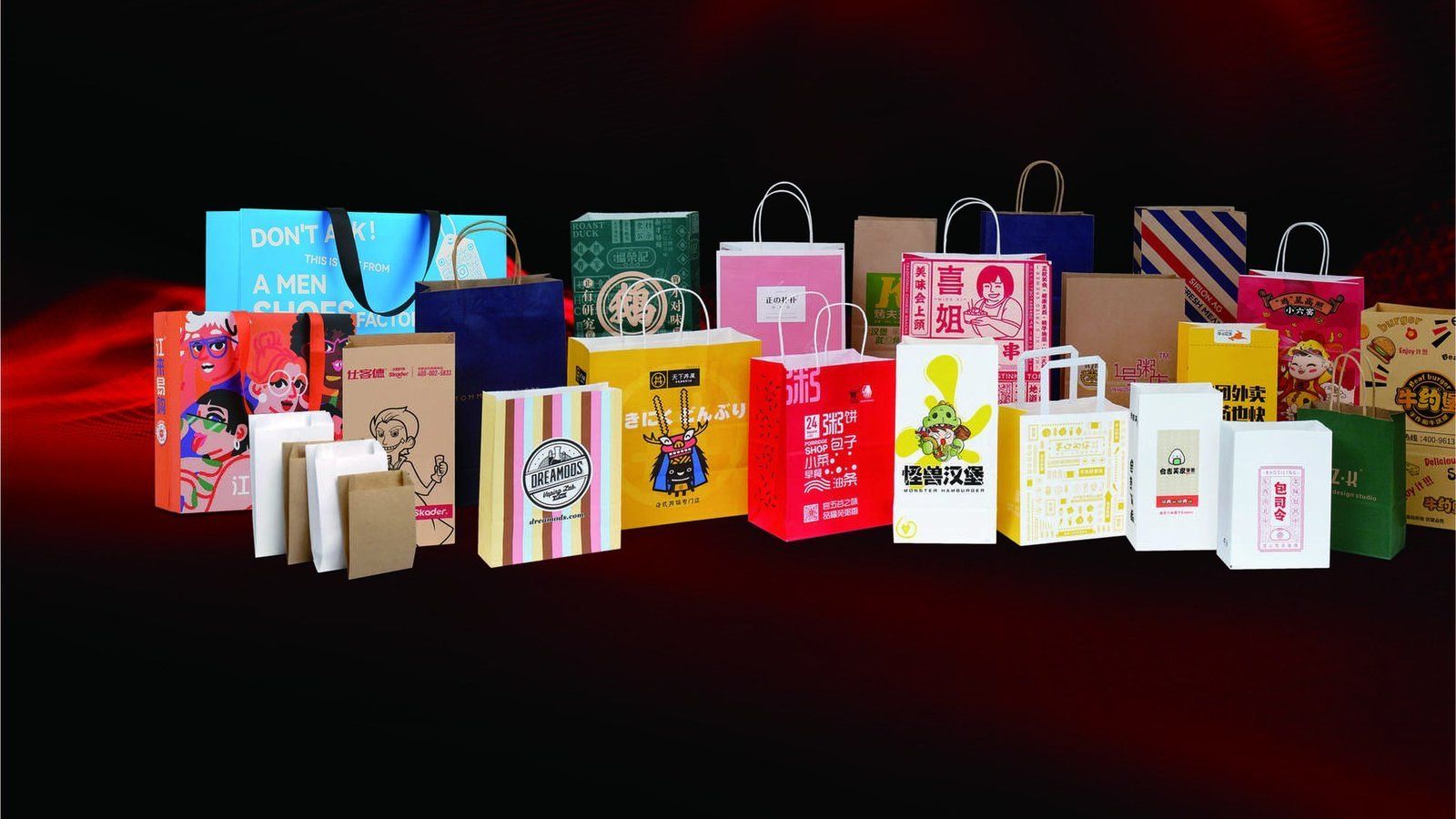
- Paper bags: handled and handle-less paper bag lines — paper bag machine guide, example model Oyang 16A.
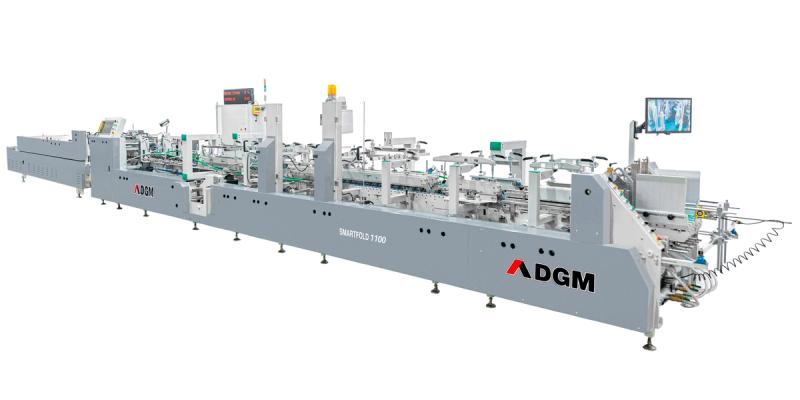
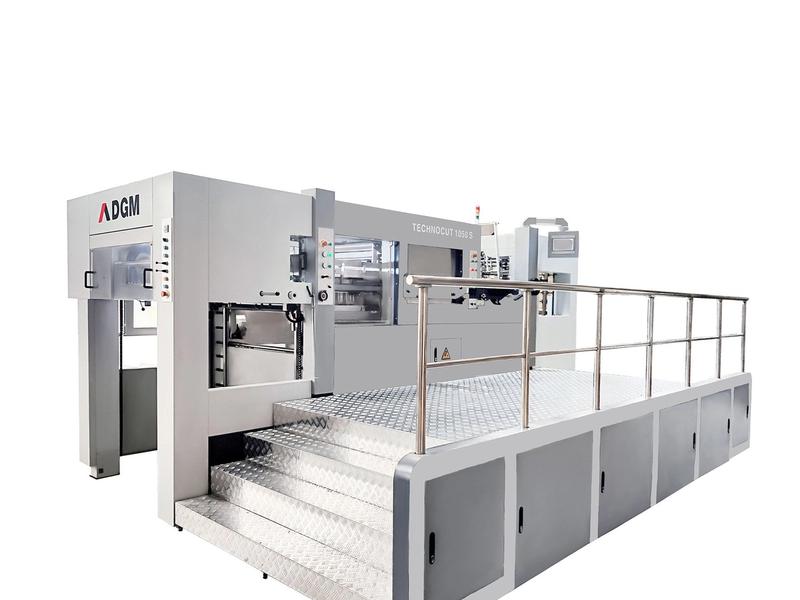
- Folding cartons: a die-cutting machine to cut, a folder-gluer to close the box.
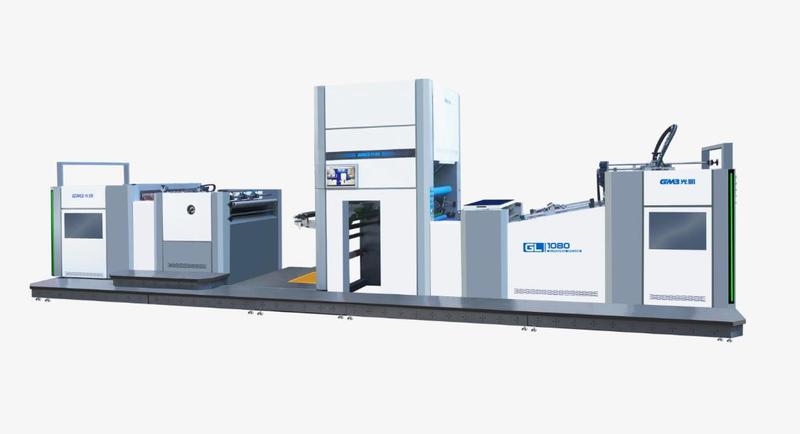
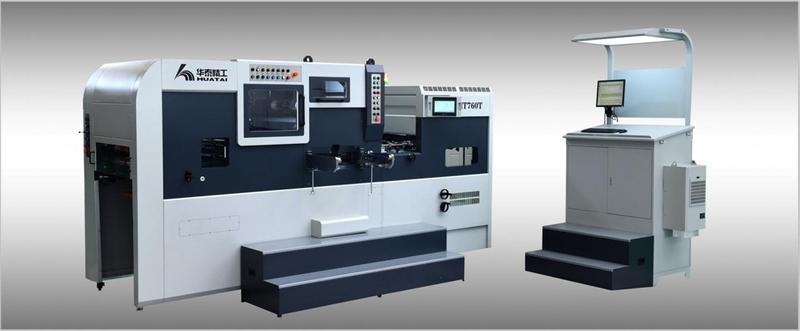
- Surface finishing: lamination and die-cutting and foil stamping — the two critical steps for recyclability.
- Premium packaging: rigid box machines for book-style and lidded boxes.
For the industry's overall direction, see our article on packaging trends 2026.
Özdemir Makine, with 30 years of experience, is the official distributor of all brands listed on our Brands page. From our offices in Istanbul and Krefeld (Germany) we support machine selection, quotations, customs clearance, installation, spare parts and technical service. For your paper and board packaging project, get in touch with us.
Sources: European Commission, announcement of 11 August 2026 · European Commission, press release of 30 March 2026 · Regulation (EU) 2025/40, EUR-Lex · WPO 2025 Sustainability Survey · SPC 2026 Sustainable Packaging Trends Report. This article is for information only and is not legal advice.
Frequently asked questions
The PPWR (Packaging and Packaging Waste Regulation) is the European Union's Regulation (EU) 2025/40 on packaging and packaging waste. It replaces fragmented national rules with common EU rules covering the whole packaging life cycle, aiming to cut waste, increase recycling and strengthen the single market.
The regulation entered into force on 11 February 2025 and has applied in phases across the EU since 12 August 2026. Harmonised labelling follows in 2028; empty-space limits, reuse targets and the requirement for all packaging to be recyclable follow in 2030.
Since 12 August 2026, food-contact packaging containing PFAS above strict limit values can no longer be placed on the EU market. Takeaway containers, fast-food wrappers, microwave popcorn bags, bakery paper and pizza boxes are among the products where these substances were commonly used.
Companies placing packaging or packaged products on the EU market are covered. Manufacturers in Türkiye producing packaging for EU brands can expect customer requests for PFAS declarations, material and recyclability data, even where the legal obligation does not fall on them directly.
From 2030, empty-space limits, restrictions on certain single-use plastic packaging and reuse targets will apply. In the same period, recycled content in plastic packaging becomes mandatory and all packaging must be recyclable.
According to the Packaging Manufacturers Association (ASD) in the WPO 2025 survey, Türkiye's recovery target is 60%, and its recycling targets are 55%, 65% and 70% for 2025, 2030 and after 2031 respectively. Separate collection runs under the Zero Waste scheme.
The regulation does not mandate any particular material. However, according to the SPC's 2026 report, negative consumer perception of plastic and high EPR fees on complex plastic packaging are pushing brands towards alternatives such as paper, aluminium and glass. Paper packaging must also be designed to be recyclable.
Özdemir Makine is the official distributor of all brands on its Brands page, including Oyang paper bag machines, DGM folder-gluers and die-cutters, and GMB laminators. Its offices in Istanbul and Krefeld (Germany) support machine selection, quotations, customs clearance, installation and spare parts.