Haber ·
Recyclable Paper Packaging Design: 8 Rules for Lamination, Foil Stamping and Adhesives
When is paper and board packaging considered recyclable? We compiled the limits on fibre content, one-sided lamination, metallised surfaces, inks and adhesives from the WPO's global design-for-recycling guide.
- Reading time
- 6 min
- Updated
- 5 October 2026

Recyclable paper packaging is packaging that can be broken down into its fibres on a paper recycling line and used again to make paper. According to the guide, under European rules a pack must contain at least 95% fibre to be considered paper packaging, while one-sided plastic coating or lamination is accepted down to certain fibre shares. In this article we summarise, from a printer's and converter's point of view, the paper and board recommendations of the Global Packaging Design for Recycling Guide (V2, August 2024), developed by the World Packaging Organisation (WPO) with Circular Analytics, FH Campus Wien and ECR Community.
In short:
- Uncoated, unlaminated paper and board is the best option.
- One-sided plastic coating or lamination: recyclable with a fibre share above 95%, usable if required between 80% and 95%, to be avoided below 80%.
- Metallisation should not cover more than 60% of the packaging surface; inks should be EuPIA-compliant and free of mineral oil.
- Double-sided plastic coatings, wax (paraffin) coatings, siliconised paper and non-separable plastic windows make recycling harder.
How is paper packaging recycled?
The guide describes paper recycling in five steps. The logic of the design rules comes from these steps:
- Collection: waste paper is collected separately by source (paper processing, commercial and household).
- Sorting and baling: it is separated by waste paper grade and baled; some systems recycle it mixed without prior sorting.
- Dry sorting: automatic sorting with NIR sensors, screens and blow-out units, followed by manual sorting, removes impurities such as wood, textiles and coated paper.
- Wet processing (pulper): the fibres are dissolved in water under mechanical stress; adhesive particles, metal clips and staples, and foils are removed at this stage.
- De-inking: depending on the intended use, inks are removed by de-inking; this step is usually not used when recycling packaging papers.
The secondary fibres obtained are used again to make paper, but fibre length decreases with each cycle. That is why it matters that packaging dissolves easily in the pulper and carries nothing that degrades fibre quality.
The fibre-share rule: when is laminated board recyclable?
| Case | The guide's assessment |
|---|---|
| Uncoated, unlaminated | Preferred solution; fibres dissolve easily |
| One-sided plastic coating/lamination, fibre share above 95% | Recyclable |
| One-sided plastic coating/lamination, fibre share 80–95% | Can be used if required |
| One-sided plastic coating/lamination, fibre share below 80% | Should be avoided |
| Double-sided plastic coating | Impedes fibre disintegration; counts as a composite material |
| Paraffin or wax coating (one or both sides) | Counts as a composite material, not paper packaging |
| Siliconised paper, wet-strengthened fibre portions | Impede fibre disintegration |
Source: WPO Global Packaging Design for Recycling Guide (V2, August 2024), paper/board sections. Country-specific differences may apply.
Worked example: adding a total of 15 g/m² of film and adhesive to a 300 g/m² board gives a rough fibre share of 300 ÷ 315 ≈ 95.2%. The same 15 g/m² coating on an 80 g/m² paper lowers the share to 80 ÷ 95 ≈ 84%; on thin paper, lamination quickly pulls the fibre share into the "usable if required" band. This is a rough calculation; how fillers and the coating layer of the board are counted can differ from country to country. Make the lamination decision together with your paper supplier's fibre-content data.
Lamination: one side only and the right grammage
Lamination is the most common way to protect a printed surface and give it a gloss or matt finish; for recyclability it is also the most critical decision point. The guide's recommendation is clear: an uncoated, unlaminated version is preferable; if lamination is required it should be applied to one side only and the fibre share checked against the table above. A double-sided plastic coating makes it harder for the fibres to dissolve in the pulper.

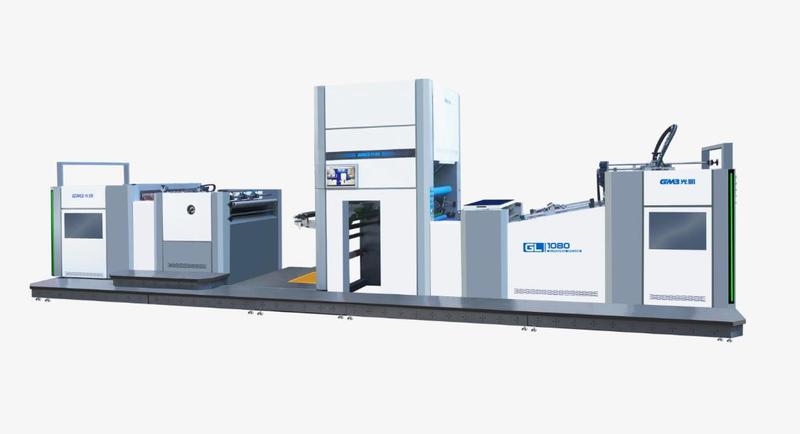
You can review laminating machine options in our laminating machine guide and the example model GMB GL-1080.
Foil stamping, cold foil and metallised surfaces: the 60% limit
According to the guide, if packaging is metallised, the metallisation should not cover more than 60% of the packaging surface. This recommendation should be considered at the design stage for luxury packaging jobs using large-area hot foil stamping, cold foil or metallised board. Limited-area applications such as logos, frames and highlights stay comfortably below this limit.

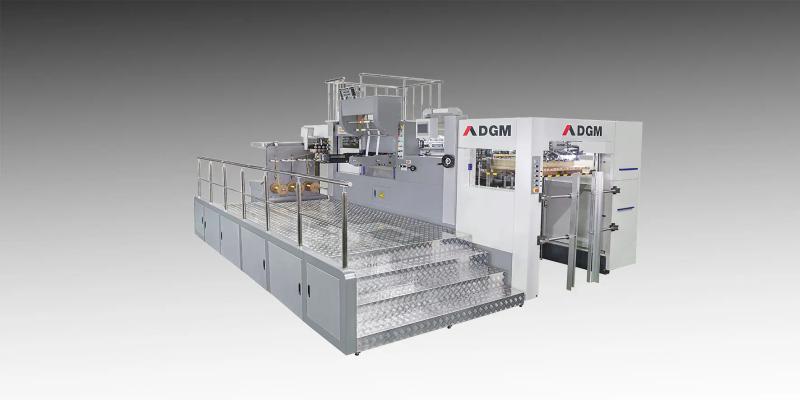
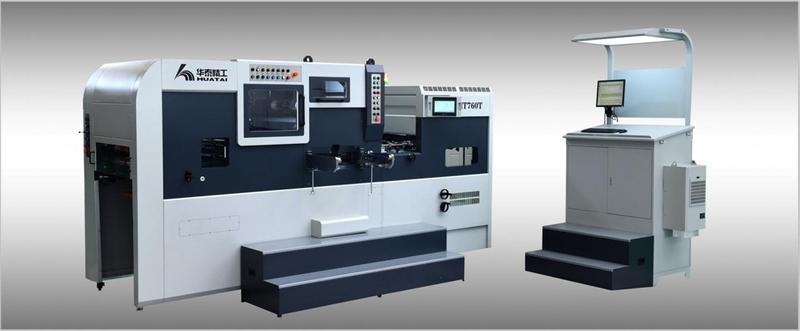
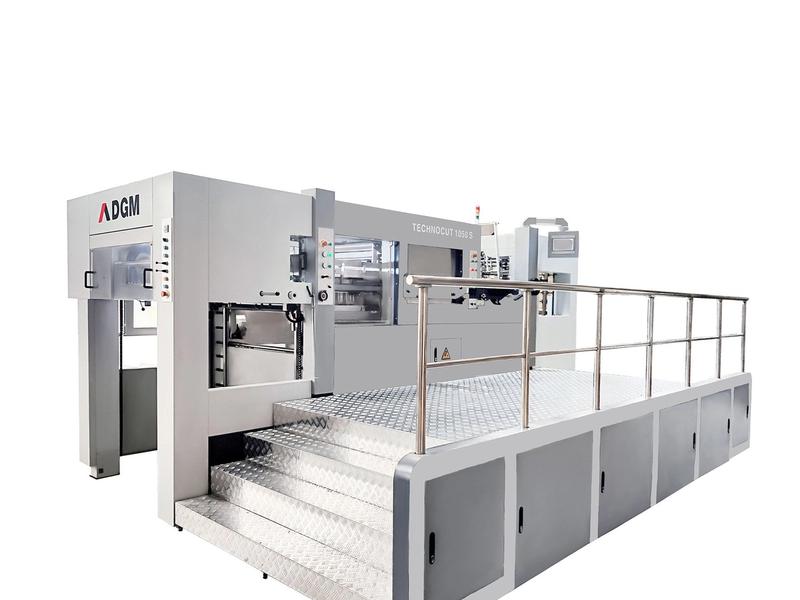
For machines that foil-stamp and die-cut in a single pass, see our die-cutting and foil stamping machine and die-cutting machine guides; for cold foil, see the screen printing machine guide.
Inks, varnishes and printing: EuPIA compliance
The guide's printing and coating recommendations:
- Printing should be kept as minimal as possible and done with EuPIA-compliant inks (in line with the European Printing Ink Association's rules).
- Inks containing mineral oil must be avoided, as they can contaminate the secondary fibres.
- EuPIA-compliant products should also be preferred for coatings and varnishes.
- Where possible, laser marking should be used for best-before dates and batch numbers.
Mineral fillers such as kaolin, talc and calcium carbonate, titanium dioxide (white pigment) and starch do not interfere with the recycling process. Fibres should ideally come from coniferous and deciduous trees; non-wood fibres such as hemp, grass and cotton are not critical in small quantities.
Adhesives, tapes and staples: sticky contamination (stickies)
Adhesive particles that contaminate recycled paper are called stickies. That is why adhesive choice matters on folder-gluer, paper bag and box lines:
- Water-soluble adhesives or hotmelt applications of 2 mm × 2 mm with a melting point of 68 °C should be preferred.
- Paper tapes can be used as long as their adhesive does not form problematic stickies.
- Staples and plastic tapes should be easy to separate in the recycling process or by the consumer.
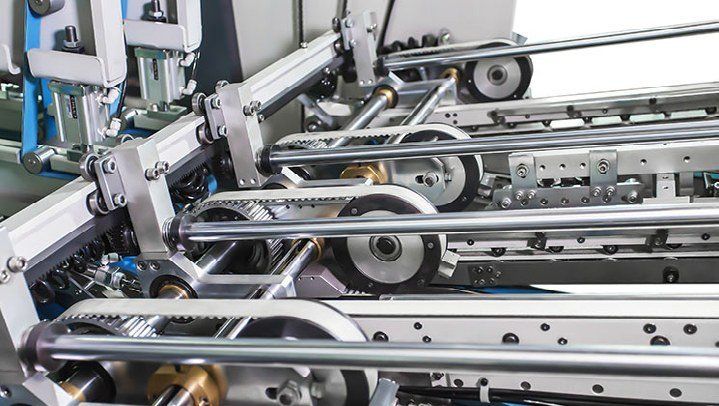
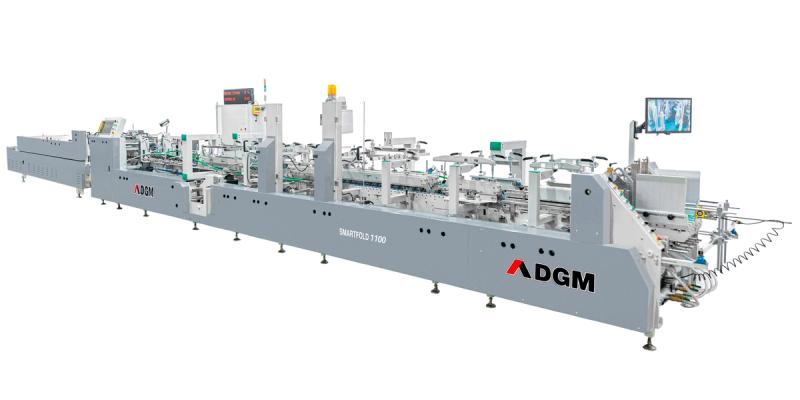
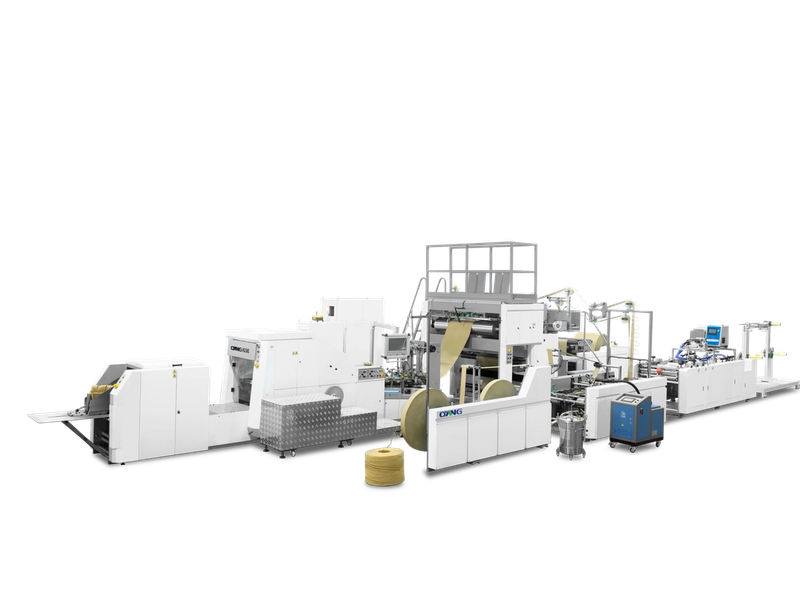
For gluing unit options see the folder-gluer guide; for adhesive and handle applications on paper bags see the paper bag machine guide.
Windows, labels and plastic parts
According to the guide, viewing windows and other plastic components that cannot easily be separated from the paper are interfering materials in recycling. If a window, label or plastic part is unavoidable, it should be designed to separate easily in the recycling process or by the consumer. The guide's general principle points the same way: correct separation should not depend on the consumer wherever possible; where it does, the pack should carry clear instructions and easy-to-use perforations.
Design checklist: 8 rules for paper and board packaging
- Choose uncoated, unlaminated paper and board where possible.
- If lamination is required, apply it to one side only; keep the fibre share above 95%, and above 80% at worst.
- Avoid double-sided plastic coatings, wax or paraffin coatings and siliconised paper.
- Limit the metallised area to 60% of the packaging surface.
- Keep printing minimal; use EuPIA-compliant, mineral-oil-free inks and varnishes.
- Prefer water-soluble adhesives or small-dot hotmelt (2 × 2 mm, 68 °C).
- Either remove plastic windows, labels and tapes or make them easy to separate.
- Avoid wet-strengthened fibre portions; if you must use them, confirm with your supplier that the product is compatible with paper recycling.
How the guide relates to the EU packaging regulation (PPWR)
The WPO guide is not a regulation but a best-practice recommendation meant to be tailored to regional recovery infrastructure. The direction is the same, though: the EU's Packaging and Packaging Waste Regulation (PPWR) requires all packaging to be recyclable from 2030, and the European Commission is due to set material-specific design-for-recycling criteria by January 2028. Until those criteria are published, the guide is the most concrete starting point. Alongside the guide, the WPO is developing country-specific waste stream mapping guides; the guide has been translated into several languages, including Finnish and Hungarian.
Özdemir Makine is the official distributor of all brands listed on our Brands page. From our offices in Istanbul and Krefeld (Germany) we help you select die-cutting, foil stamping, laminating, folder-gluer and paper bag lines for the switch to recyclable paper and board packaging. Browse our die-cutting, lamination and folding and gluing machines, or contact us for technical information and a quotation.
Source: WPO — Packaging Design for Recycling: A Global Recommendation for Circular Packaging Design (V2, August 2024; ECR Austria, FH Campus Wien, Circular Analytics). Values are taken from the guide's paper/board sections; country-specific rules may differ.
Frequently asked questions
When it is collected in the paper fraction and can be broken down into fibres in the pulper. According to the WPO guide, European rules require a fibre share of at least 95% for a pack to count as paper packaging; a double-sided plastic coating or a wax coating makes it a composite material.
One-sided lamination is considered recyclable if the fibre share is above 95%; between 80% and 95% it can be used if required, and below 80% it should be avoided. A double-sided plastic coating impedes fibre disintegration.
The WPO guide recommends that metallisation should not cover more than 60% of the packaging surface. Limited-area foil applications such as logos and highlights stay below this limit; for large-area foil and metallised board, the share should be calculated at the design stage.
EuPIA-compliant inks and varnishes should be used and inks containing mineral oil avoided, as mineral oil can contaminate secondary fibres. Printing should be kept as minimal as possible.
Water-soluble adhesives or hotmelt applications of 2 mm × 2 mm with a melting point of 68 °C are recommended. The aim is to prevent adhesive particles (stickies) that contaminate recycled paper.
Plastic windows that cannot easily be separated from the paper are considered interfering materials in recycling. If a window is unavoidable, it should be designed to separate easily in the recycling process or by the consumer.
The World Packaging Organisation (WPO) developed the guide in partnership with Circular Analytics, FH Campus Wien and ECR Community, based on ECR Austria's circular packaging design work. The current version is V2 (August 2024).
Özdemir Makine is the official distributor of all brands on its Brands page, including Huatai and DGM die-cutters, GMB laminators, DGM folder-gluers and Oyang paper bag machines. Contact its Istanbul or Krefeld (Germany) office for a quotation.